
Blog
A New Year’s Resolution That Will Make You “Ready for Anything”
Dec
If you only make one offline resolution this year… do it
Every January, people outside the network make the same silent promises to each other. This is the year I finish it. Fence. Pantry. Power reserve. Bag by the door. And then life appears, the calendar turns, and in the fall most of these promises are still in place – about half of them are fulfilled.
It’s not about guilt or motivation. It’s about whether the things you “wanted to get to” would actually work if you needed them tonight. That’s what this article is about – and why it’s more important than any new gear you might buy this year.
The turn of the year always feels like a natural point of pause – a chance to put a burden aside, look around and be honest. As 2026 opens before us like a freshly tilled field, it’s worth slowing down enough to decide what we will actually sow this year. Not just what we say about planting. Not ideas written down on scraps of paper or written in bookmarks. But things we will look at from start to finish – in our homes, in our preparations, and in our bodies and minds.
Otherwise, December will roll back and we’ll be left in the same place, staring at the same half-finished projects and wondering why we still don’t feel more prepared than we did last year.
The 50% Rule: Where Good Intentions Go to Death
For unfinished projects, the lights don’t come on when a storm hits – 2026 is the year we stop living at 50% project completion and actually finish that porch and our preparations.
Let’s start with a hard truth that most homesteaders and preppers already recognize when they hear it: we live surrounded by half-finished projects.
You know exactly what I mean.
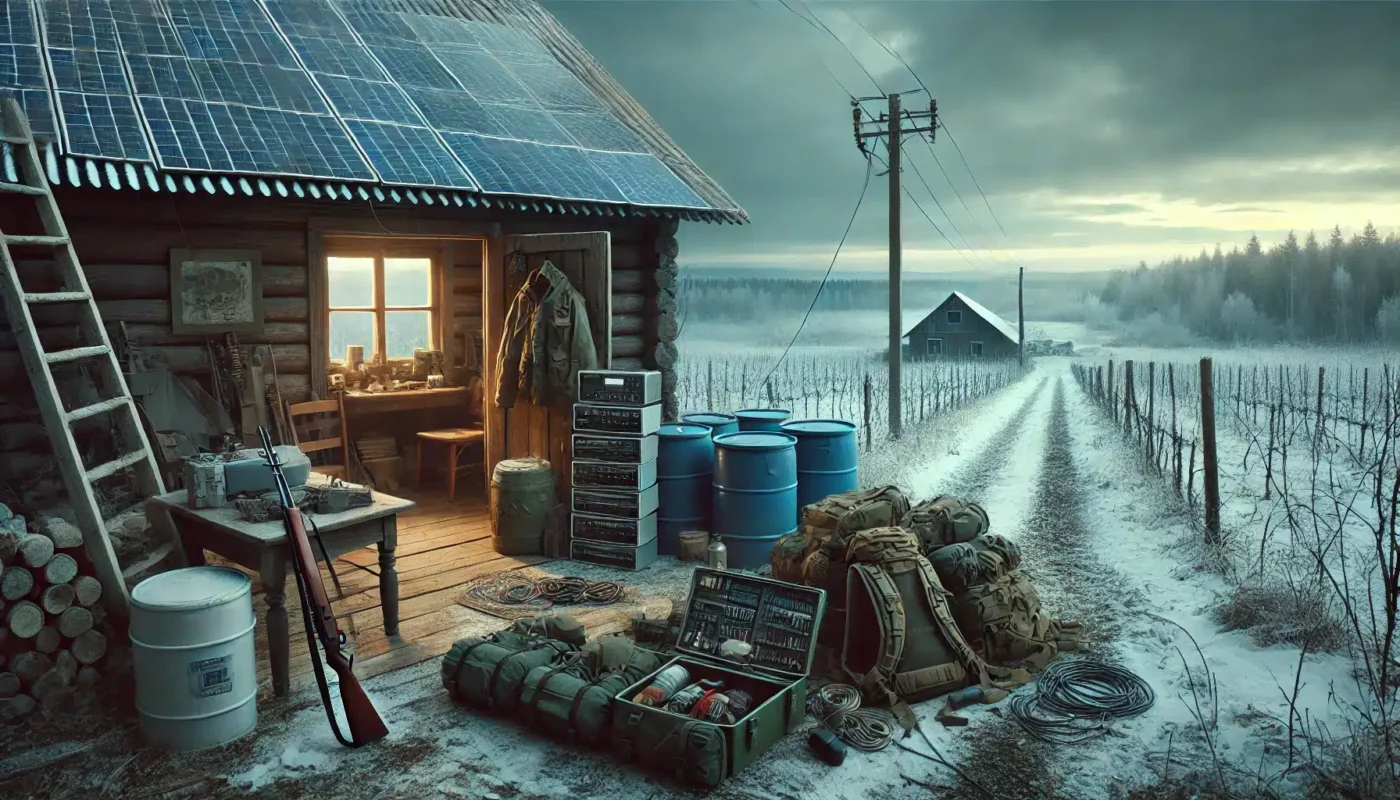
There is a garden fence that is “basically ready.” A backup power system that requires another cable run. A rifle that shoots well but still has no slingshot or confirmed zero. A bug out bag, technically packed, except you’ll throw it away every time you need it and you’ll never fold it properly.
Individually, each of these things seems close enough. Together they are a problem.
Because when the year is quiet, the unfinished one seems bearable. But when a storm warning sounds on the radio, the grid unexpectedly goes down, or smoke begins to rise from the ridge, the missing “50% left” appears immediately. Suddenly you’re scrambling – looking for water containers, looking for batteries, considering equipment choices, and realizing that your grab-and-go setup actually needs ten more minutes and a clean floor.
Then everything becomes clear: starting projects does not count in a crisis. Only ready-made, functional systems do this.
Finish fewer things and win more
And now the good news. You don’t have to overhaul your entire life in 2026 to feel a real difference. In fact, completing just a few half-finished projects will provide you with more security and greater peace of mind than starting ten new ones ever could.
There is something powerful about completion. When you finally complete a project, you don’t just gain opportunities – you give your brain the victory. And that matters. Every time you open a really stocked pantry or turn on backup power that actually works, you hear a quiet internal signal: it’s done.
This feeling builds dynamics.
So instead of chasing every new shiny idea to get ready this year, pick a few things and get them done. Fully. Entirely. No stars.
Pack, test, and seal a bug out bag so that when someone says, “We’re leaving – now,” they don’t need any extra time or decision. Adjust, set and lock the Chest Rig. Install the carrier. Zero the optics. Install the irons. Call it done.
Then do something most people skip: stop and acknowledge it. Sit on the porch with a cup of coffee. Look what you finished. Let him register. These small moments of satisfaction are fuel for the next difficult task.
Take inventory before you spend another dollar
From there, real progress starts with knowing what you already have.
Many of us are sitting on countless cans of ammunition, forgotten equipment containers, duplicate tools, and medical supplies that quietly expire in a dark corner. It’s like being ready. But often it’s just a mess with a tactical label stuck on.
So maybe this is the year you pull everything out and take inventory. Count it. Sort it out. Write it down. Be honest.
You may find that you have plenty of .22 or match ammo that you rarely shoot, but you are lacking basic practice rounds and magazines. You might discover a box of PMAGs you forgot about. Or a bag of medical equipment that really should have been replaced two years ago.
When you see what you really have, everything changes. Stop wasting money on duplicates. You stop guessing. And you start filling real gaps, not imaginary ones.
Store food as you expect you will need it
Next to the equipment there is food – and on the farm it is different.
Storing food is not an abstract preparation when you live closer to land. It’s the difference between continuing a difficult season and joining the competition with everyone else. Walking into a full, labeled and overturned pantry triggers something deep within you. It calms the nerves. It reminds you that all those little, boring decisions add up.
So maybe 2026 will be the year you apply a simple rule: each month you stockpile a little more food than you did last year.
This may mean canning extra jars. Longer dryer operation. Freeze-dried bulk products. Or visiting a local wholesaler and returning home with boxes of fruit and vegetables that take a week to process.
Not only do you save money compared to retail. You’re racking up calories, nutrients, and confidence – quietly and steadily.
Training: where comfort ends and opportunities begin
Of course, shelves and hardware will only get you so far.
All the guns, radios, and backpacks in the world won’t help you much if you don’t know how to use them under stress. Training is the moment when this gap closes – and that’s when many people silently withdraw.
Real training costs something. Time. Ammunition. Money. Comfort. Pride.
But that’s why it matters.
Good pursuits – whether firearms, medicine, survival skills, canning, or gardening – give you permission to fail in a safe place. You find your weak spots before life finds them for you. You sweat, you fight, and you break things surrounded by people who can help you fix it.
Along the way, you build relationships that aren’t based on online comments or equipment reviews. They come from shared effort and shared discomfort – the kind of bonds that really matter when things get real.
Become comfortable with being uncomfortable
Then there is the physical side of being prepared, which may be the hardest truth of all.
Modern life has softened most of us, even those living in the countryside. Machines do the lifting. Climate control moderates the seasons. Real daily manual labor became optional.
But if something truly disruptive ever happens – a grid failure, a fuel shortage, a ruptured supply chain – it won’t be just equipment and skills that separate those who cope from those who fail. This will be the one who can carry weights, haul water, chop wood, walk up hills and still think straight when tired and sore.
So maybe 2026 will be the year you stop thinking so much about fitness and just start moving on purpose.
Go your own way or trails. Add a package. Turn on the light. Add weight slowly. Carry buckets. Transfer logs. Walk along the fence lines. Use your land like a gym.
The goal is not to look impressive. It has to be useful, effective and difficult to break.
Small habits, real responsibility
What all of this has in common is not motivation – it’s responsibility and small, repeatable habits.
Big goals sound good. Small actions change lives.
Studying five minutes a day to get your radio license will get you there faster than staring at a manual you never open. Running a few miles a few times a week will do more for your health than any expensive gadget.
So find someone to check you out. Spouse. Friend. Training partner. Commercial liability both ways. And when you achieve your goal – finish the pantry, choose a rifle, pass the test – mark it. Write it down. Celebrate it, however briefly.
These moments stimulate your brain to continue working.
Fresh field in 2026
The year 2026 is ahead of you, think of it as the untrodden land.
You can spread your efforts everywhere and end the year looking at unfinished rows. Or you can choose a few clear goals, pursue them consistently, and ultimately collect something real.
Finish up your half-finished projects. Take an inventory. Fill your pantry. Train for real. Move your body. Be more organized than last year.
And remember – you are not alone in this. This community is full of people sharing the same half-finished projects and exhausted motivation, all striving for a more resilient, independent life.
So get a new notebook. Choose one place to start. Take one honest step today.
Then let that step carry you to the next one – until you look at the end of 2026 and realize you weren’t just talking about getting ready this year.
You actually did the job.
